
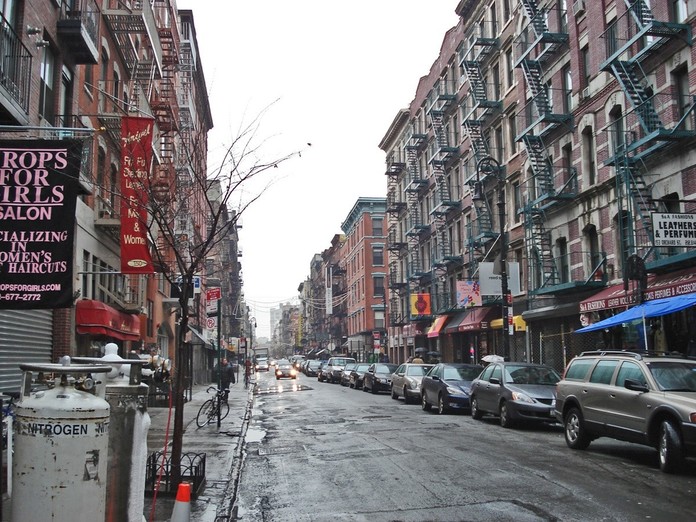
The Lower East Side has always been one of New York’s most colorful neighborhoods. More than 23 million Europeans immigrated to American shores between 1880 and 1919, seeking escape from famine, poverty, and religious persecution. About 1.5 million Jews, many of them fleeing Russian pogroms, wound up in ramshackle tenements here.
They scratched out meager livings peddling wares on Orchard Street or working dawn to dusk in garment center sweatshops. By 1920, some 500 synagogues and religious schools (Talmud Torahs) dotted the area. Though the garment center has moved uptown and the ethnic mix of the Lower East Side is different today, Orchard Street, the area’s primary shopping artery, and its immediate surroundings remain a largely Orthodox Jewish enclave.

The area is rich in Jewish history; 80% of today’s American Jews are descendants of immigrants who once lived on these streets. Today, more Jews—almost two million—live in New York City than anywhere else in the world outside of Israel.
Before You Start:
Start: Take the F train to Delancey Street or the J, M, or Z to Essex Street.
Finish: Russ and Daughters, 179 Houston St.
Time: Up to 4 hours if you do all the tours.
Best Time: Sundays, when you can tour the Eldridge Street Synagogue and see Orchard Street in full form. If you begin around 9:30 am, you’ll also get a chance to look inside Bialystoker Synagogue.
Worst Time: Saturdays and Jewish holidays (when almost everything is closed) and Friday afternoons (when stores close early).
Note: Because tours of the highly recommended Lower East Side Tenement Museum sometimes fill up on Sundays, you might want to stop there earlier in the day (it opens at 11 am) and pick up tickets.
Lower East Side Walking Tour Stop By Stop
Bialystoker Synagogue, 7 Bialystoker Place (Willett St.).
Occupying a converted 1826 Federal-style fieldstone church, this beautiful Orthodox landsmanschaft shul (synagogue of countrymen) was purchased in 1905 by an immigrant congregation from Bialystok (then a town in Russia; today, because of changing borders, in Poland). The congregation itself was organized in 1878, and in honor of its 100th anniversary, Willett Street was renamed Bialystoker Place in 1978. Enter via the downstairs steps below the main doors. The temple’s interior walls and ceiling are ornately painted with Moorish motifs, zodiac signs (which are found in Jewish cabala writings), and biblical scenes such as the Wailing Wall and the burial place of Rachel. The elaborate gold-leafed ark (which contains the Torahs) was designed in Italy. Look up at the glittering crystal chandeliers, which hang from a ceiling painted as a blue sky with fluffy white clouds.
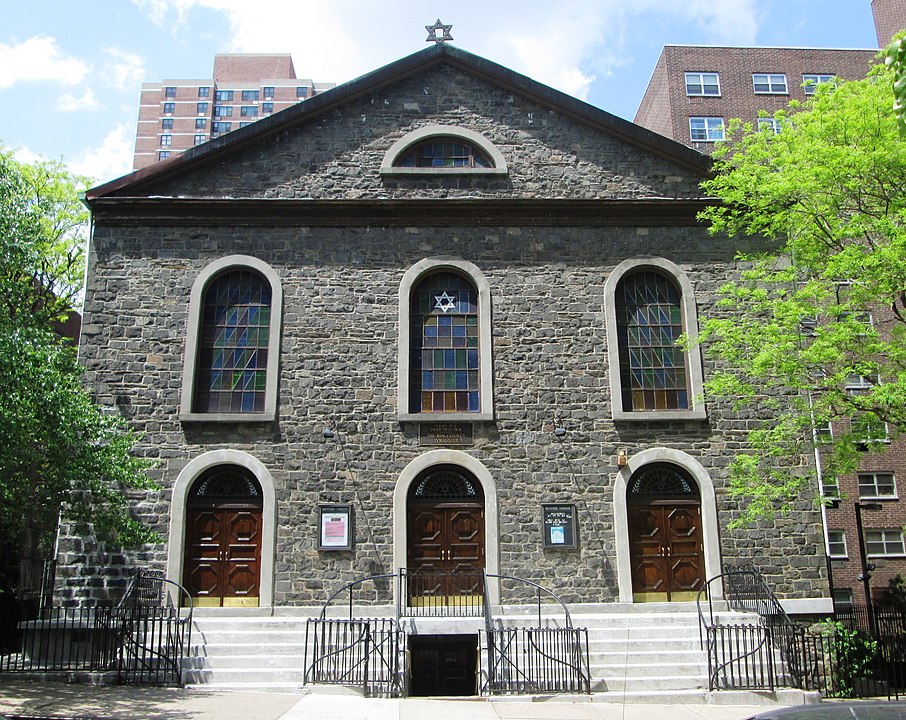
Bialystoker Synagogue is open daily (except for Sat, the Jewish sabbath) until about 10:30am (sometimes later) and evenings (except for Fri) from 6:30 to 8pm; if you’re going at another time, you can call a day or two ahead to arrange admission.
Abrons Arts Center/Harry De Jur Playhouse, 466 Grand St.
Founded by sisters Alice and Irene Lewisohn in 1915 to stage productions by the Henry Street Settlement’s youth dramatic groups, this renowned center went on to present premieres of S. Ansky’s The Dybbuk (attended by authors Edna Ferber and Willa Cather) and James Joyce’s Exiles, along with plays by George Bernard Shaw, Havelock Ellis, Anton Chekhov, Scholem Asch, and Eugene O’Neill. It remains a vital performance space and cultural center, offering a comprehensive schedule of dance, theater, music, art exhibits, classes, and workshops. Pick up an events schedule while you’re here.
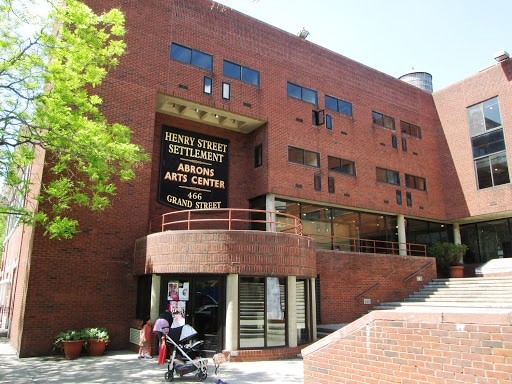
Behind this modern extension is the center’s original core: a three-story Georgian Revival building. Cross Grand and head left down Samuel Dickstein Plaza.
The Henry Street Settlement, 263–267 Henry St.
Called to tend a patient on Ludlow Street in 1892, 25-year-old German-Jewish nurse Lillian Wald was appalled at the squalor of tenement life. She moved downtown in order to study the living conditions in the Jewish ghetto and established a district nursing service on Henry Street in 1893. Two years later, the service evolved into the Henry Street Settlement, one of America’s first social agencies. It offered job training, educational facilities, summer camps for children, concerts, and plays.
Wald dedicated her life to helping the indigent of the Lower East Side fight disease, malnutrition, and ignorance, and the “house on Henry Street” initiated progressive social legislation, including child labor laws. Social reformer Jacob Riis said of Lillian Wald, “From the very start, the poor became ‘her people.’ She took them to her heart, and they quickly gave her unstinted love and trust.” Years ago, you might have seen Jane Addams, Albert Einstein, or Eleanor Roosevelt discussing vital social issues in the dining room. President Bill Clinton visited during his 1992 campaign.
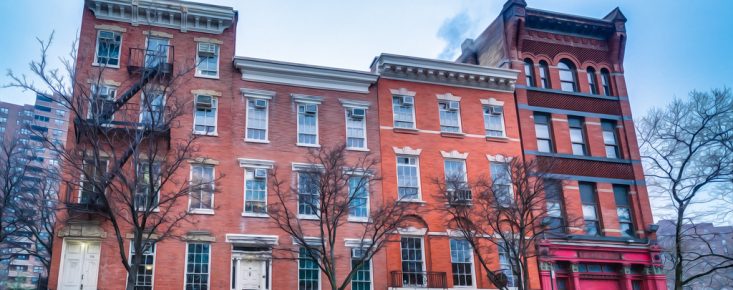
The settlement continues its good works, operating homeless shelters and numerous programs for neighborhood residents. Its three original late-Federal/Classic Revival buildings—built in 1832 (no. 265), 1908 (no. 267), and 1934 (no. 263)—are now used for administrative purposes and are designated landmarks.
Educational Alliance (the David Sarnoff Building), 197 East Broadway.
“Uptown” German-Jewish philanthropists founded The Alliance in 1889 to help fellow immigrants assimilate, Americanize, and adapt to a baffling alien culture. It offered them training in English, courses in business, cultural and civic programs, legal counsel, music lessons, and athletic facilities, not to mention such hard-to-come-by amenities as hot showers and pasteurized milk for children.
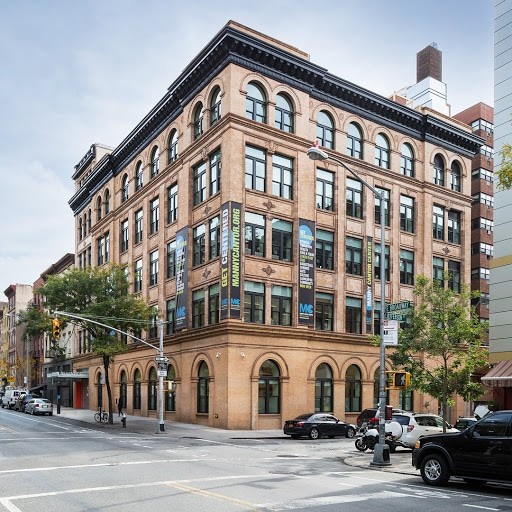
Today, the Educational Alliance’s programs operate out of 21 locations and serve not only Jews, but also African-, Chinese-, and Latin-American New Yorkers. A Hall of Fame on the main floor is lined with photos of notable alumni such as Eddie Cantor, David Sarnoff, Jan Peerce, Jacob Epstein, Arthur Murray, and Louise Nevelson. Continue in the same direction. You’ll notice by the signs that the old Jewish neighborhood here has given way to the ever-expanding and vibrant Chinese neighborhood, which far exceeds the traditional boundaries that maps label “Chinatown.”
Forward Building, 175 East Broadway
For 60 years, this building was the home of America’s most prominent Yiddish newspaper, the Forverts (in English, The Forward). Founded in 1897 by a group of Russian Jewish immigrants, the Forverts guided thousands of Eastern European Jews through the confusing maze of American society. In the 1920s, its daily circulation reached 250,000 copies. Lithuanian immigrant Abraham Cahan served as editor of the newspaper from its inception until his death in 1951.
Under his guidance, this socialist and zealously prolabor newspaper examined every facet of Jewish and American life. It explained American customs and social graces to greenhorns—everything from baseball to personal hygiene—and exhorted readers to learn English and educate their children. The paper also presented—along with trashy serialized romance novels—quality fiction by writers like Sholem Asch, Sholom Aleichem, I. J. Singer, and I. B. Singer. The latter Singer worked on the newspaper’s staff throughout his adult life, and all of his books, which were written in Yiddish (later translated), were first published in The Forward.
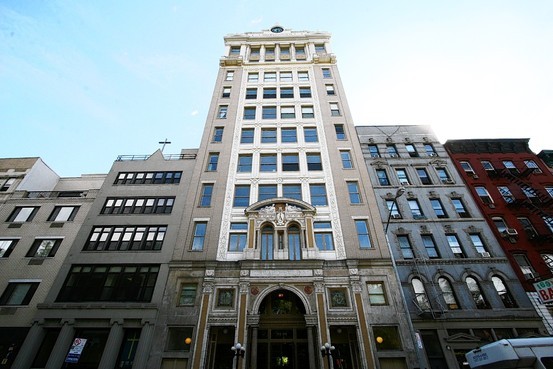
Today the Forward building, constructed in 1912 specifically to house the paper, is a Chinese-American community center. Though the male and female figures centered on a sunburst above the door remain (they symbolize enlightenment), the flaming torches (socialist symbols) and portraits of Marx and Engels on the building’s facade are obscured by Chinese signage.
The Forward still exists today as a vital newspaper headquartered uptown. Since 1990, it has been published in English as well as in Yiddish. In the heyday of the Forverts, the Chinese restaurant now occupying the corner of Rutgers Street and East Broadway was the Garden Cafeteria, a superb dairy restaurant patronized by members of the Jewish intelligentsia; Leon Trotsky frequently dined here when he was in New York.
Eldridge Street Synagogue, 12–16 Eldridge St.
When this synagogue was built in 1886–88 by a congregation of Polish and Russian Jews, it was the most magnificent synagogue on the Lower East Side. It was also the first synagogue built by Eastern European immigrants, who had previously worshipped in converted churches. Designed by the Herter Brothers (interior designers for wealthy New York families like the Vanderbilts), its architectural and interior decor reflects a blend of Gothic, Romanesque, and Moorish styles.
The grandiose terra-cotta and brick facade is highly symbolic: Its cluster of five small windows represent the five books of Moses, the 12 roundels of the rose window symbolize the 12 tribes of Israel, and so on. The greatly deteriorated, but once opulent, sanctuary was fitted out under a 70-foot central dome with an ornately carved towering walnut ark from Italy, trompe l’oeil murals, stained-glass windows, scagliola (imitation marble) columns, and Victorian glass-shaded brass chandeliers. The congregation flourished for several decades, but as wealthy members moved away and quota laws of the 1920s slowed immigration to a trickle, funds became short and the building deteriorated.
By the 1940s, the main sanctuary was in such bad repair that it was boarded up. Not until the 1970s did urban preservationists and historians begin taking an interest in the building.
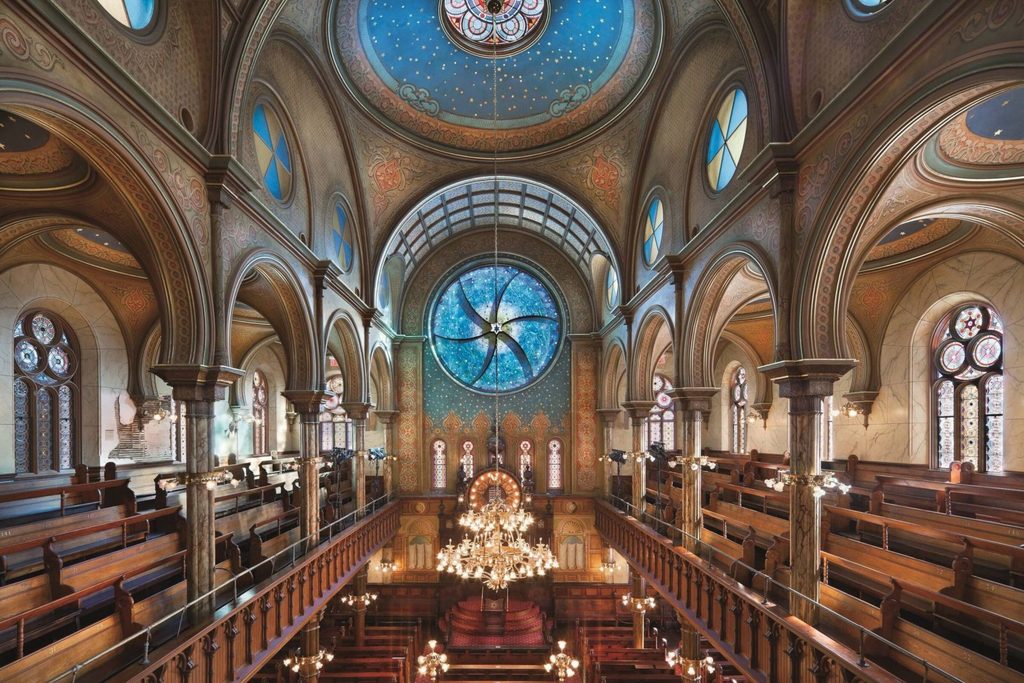
The Eldridge Street Project, founded in 1986, is now restoring the building as an active synagogue and Jewish heritage center. The synagogue currently has a small Orthodox congregation. Visitors can pop in for a look for a buck, or take 1-hour tours every Sunday on the hour from 11am to 4pm, Tuesday and Thursday at 11:30am and 2:30pm. Admission is charged (it goes toward the renovation). While you’re here, inquire about the synagogue’s many programs and lectures.
Hebrew Religious Articles, 45 Essex St.
This shop has been here for more than 50 years. Its shelves and display cases are cluttered with Jewish books, ritual phylacteries (leather cases containing Scripture passages, which are worn by Jewish men during weekday morning prayer) and shawls, sacred scrolls, commentaries on the Torah, menorahs, antique Judaica, electric memorial candles, seder plates, mezuzahs, yarmulkes, cantorial and Yiddish recordings, and a marvelous collection of turn-of-the-20th-century Eastern European postcards.
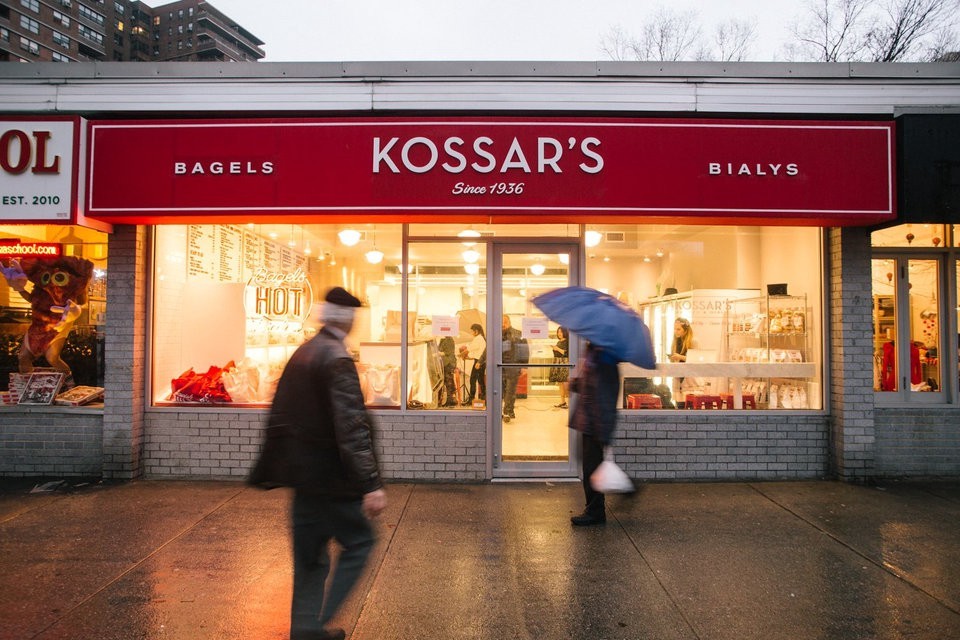
Kossar’s Bialys, 367 Grand St.,
Here you can watch bakers making bialys, bagels, and bulkas (long bialylike rolls). Bialys (round rolls with a dimple in the middle) were invented by bakers from the Polish town of Bialystok, and this shop has been making delicious ones since the turn of the 20th century. Backtrack west along Grand Street, crossing Essex, and make a right onto Orchard Street.
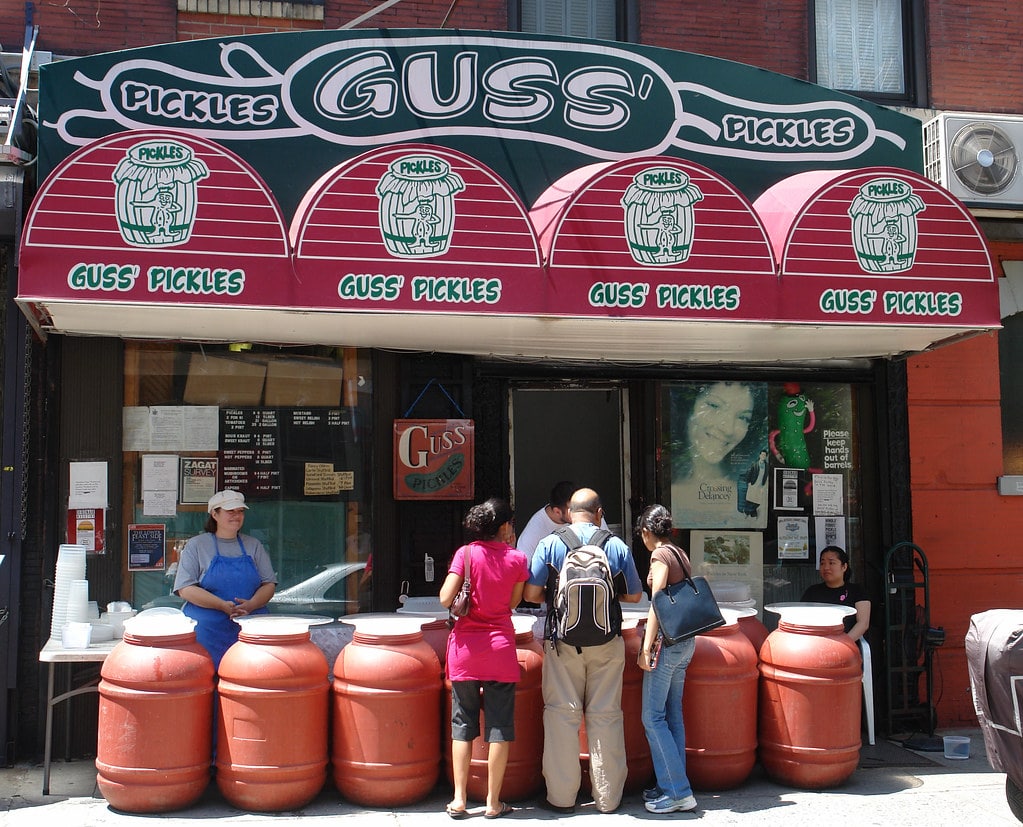
Guss Pickles, 357 Grand St
You’ll smell the shop’s briny aroma halfway down the street. Guss Pickle Products originated in 1910, and it’s now run by its fourth generation. The giant plastic barrels that line the sidewalk out front are filled with sours, half sours, hot pickles, pickled tomatoes, olives, sauerkraut, horseradish, and other delicacies. Everything is made on the premises. Buy a delicious pickle to eat on the street, or purchase a jarful. It’s open Sunday to Thursday 9am to 6pm and Friday 9am to 4pm.
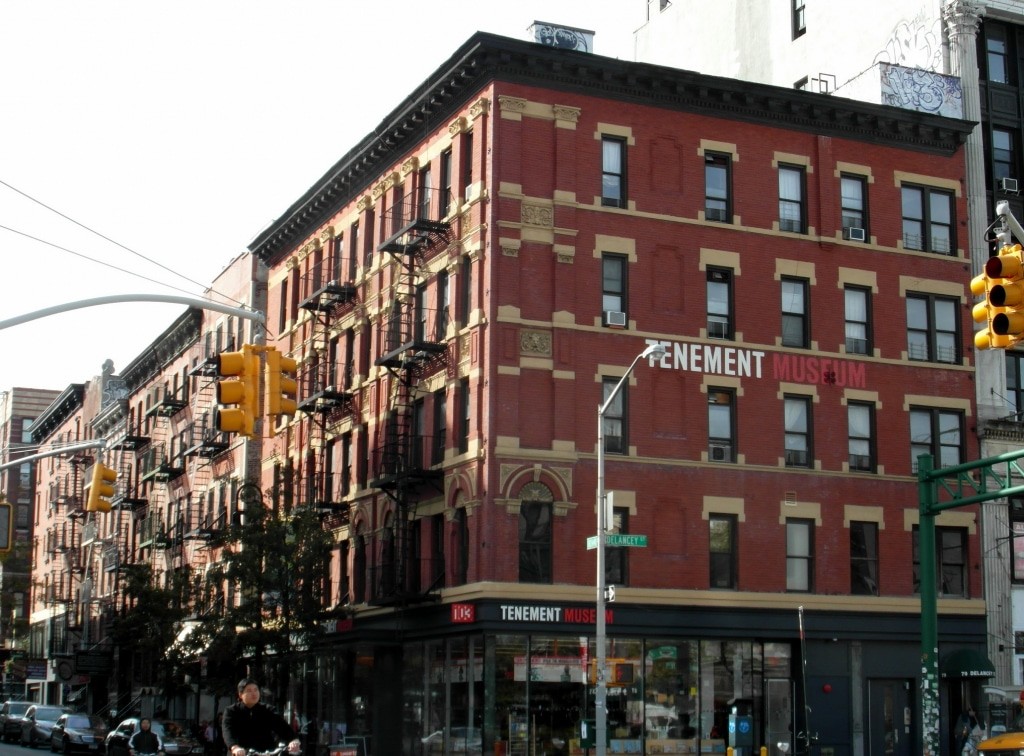
Lower East Side Tenement Museum, 90 Orchard St.
Conceived as a monument to the experience of “urban pioneers” in America, this unique facility documents the lives of immigrant residents in an 1863 six-story, 22-apartment tenement. Also on display here are Depression-era photographs of tenement life by Hungarian-born WPA artist Arnold Eagle and some of the 1,500 objects found in nooks and crannies of the building.
The guided tours (there are three to choose from) give a thorough history, but to whet your appetite, here are a few quick facts about the building: Up to 10,000 people from 20 different countries lived at 97 Orchard over a period of 72 years (the landlord sealed the building in 1935 so he wouldn’t have to bring it up to code under the new housing laws, inadvertently creating the perfect time capsule).
These immigrants probably would have been astonished to hear that their crowded building of cold, cramped, airless apartments would one day be listed on the National Register of Historic Landmarks. It was reopened in 1988.
Residents lived (and often worked, sewing piecework for garment manufacturers or taking in laundry) in threeroom apartments with a total area of just 325 square feet. Scant light trickled through windows at distant ends of railroad flats, and the only heat came from the coal- or wood-burning cooking stove.
Large families, often supplemented by boarders for extra cash, lived in such dwellings without running water (until the 1890s it had to be fetched from a backyard pump and hauled upstairs). Other modern conveniences that tenants had to do without included indoor plumbing (until plumbing was installed at the turn of the century, chamber pots served as toilets, and slops had to be carried to privies in the backyard; after that, there were toilets in the hall) and electricity (which may not have been installed until the 1920s).
Bed legs were often placed in cans of kerosene, which, though it created a fire hazard, discouraged bedbugs. Lucas Glockner, the German immigrant who built the place, was unhampered by building codes; few existed at the time, and the ones that did were not enforced. By 1915, as many as 18 people sometimes occupied one apartment, sleeping in shifts. In such unhealthy conditions, 40% of the babies born here died, and disease was rampant.
The museum has re-created two apartments based on records, letters, and the memories of people who once lived here as children, and it is currently re-creating a third. The museum is open daily 11am to 5pm. There is an admission fee for the excellent hour-long tenement tours, which leave every 20 to 30 minutes on Tuesday to Friday from 1 to 4pm, and on weekends from 11am to 4:30pm (sometimes also Mon in summer).
Pick up a schedule of the museum’s weekend neighborhood tours for future excursions, including the kids-oriented Confino Apartment tour, in which a costumed actress re-creates the life of a teenage tenement resident by telling her story and answering questions.
Orchard Street
It’s hard to imagine, but Orchard Street was named for the orchards of an 18th-century farm at this location owned by James Delancey, lieutenant governor of the British province of New York (Delancey St. is named for him). In the 19th century, this street was a vast outdoor marketplace lined with rows of pushcarts.
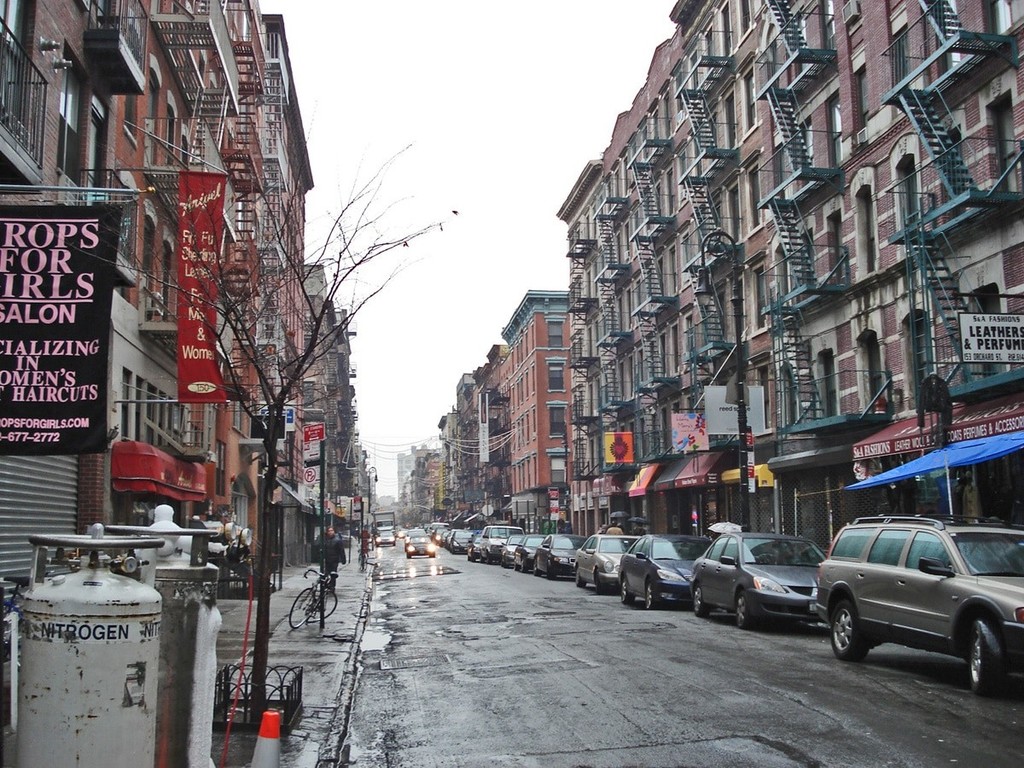
Today, pushcarts have been replaced by stores, though much of the merchandise is still displayed outside on racks. You can save up to 50% over uptown department stores here, and many shop owners are willing to haggle over prices. However, don’t expect polite service.
On Sundays the street is so jammed with shoppers that it is closed to vehicular traffic between Delancey and Houston streets. But Orchard Street on Sunday is a phenomenon you must experience at least once. Come back to do serious shopping on a weekday when you have the stores to yourself. Continue north on Orchard Street, turning left on Houston Street.
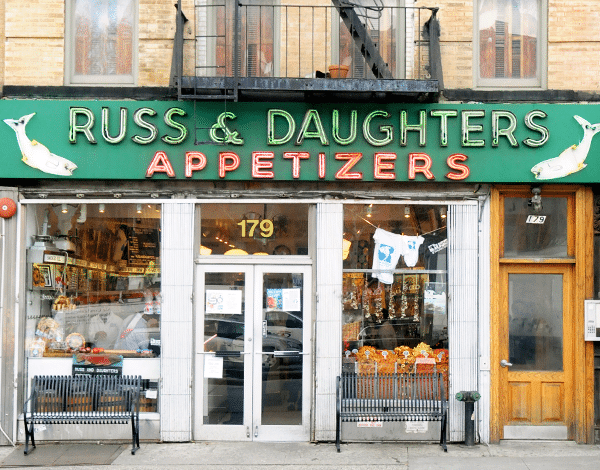
Russ and Daughters, 179 East Houston St.
Joel and Bella Russ began selling food from a pushcart in 1911. Their operation evolved into one of New York’s most famous appetizer stores, which is now run by their grandson, Mark Federman. At this final stop on the tour, you can stock up on Nova lox, creamed or schmaltz herring, whitefish salad, gefilte fish, halvah, and other Jewish delicacies, and take a little of the Lower East Side home with you.
Bonus Tip: Katz’s Delicatessen, 205 East Houston St. at Ludlow Street
Katz’s Delicatessen is a classic New York deli that’s been in business at this location since 1889. The interior is little changed from those days. Even the World War II sign reading “Send a salami to your boy in the Army” is still intact. Katz’s was the setting for Meg Ryan’s famous faked orgasm scene in the movie When Harry Met Sally. “She didn’t really fake it,” says owner Fred Austin, “it was the food.” Between takes, costar Billy Crystal, a great Katz’s fan, wolfed down a dozen corned beef sandwiches, supplemented with hot dogs, cherry peppers, and pickles.
Note the photographs of Katz’s in the old days and its famous patrons hanging in the window and on the blond wood walls; everyone from Jackie Mason to Houdini to Bill Clinton has eaten here. Order a pastrami or corned beef sandwich on rye (it’s stuffed with about 3⁄4 pound of meat), a potato knish, and a New York egg cream.
Current owner Austin took the place over from the Katz family about a decade ago, but he hasn’t changed a thing, not even the archetypal surly Jewish waiter service. “If anyone’s nice to a customer, I want to hear about it,” he says. There’s cafeteria and waiter service. Katz’s is open Sunday to Wednesday 8am to 10pm, Thursday 8am to 11pm, and Friday and Saturday 8am to midnight.
Your Lower East Side Walking Tour Map

