
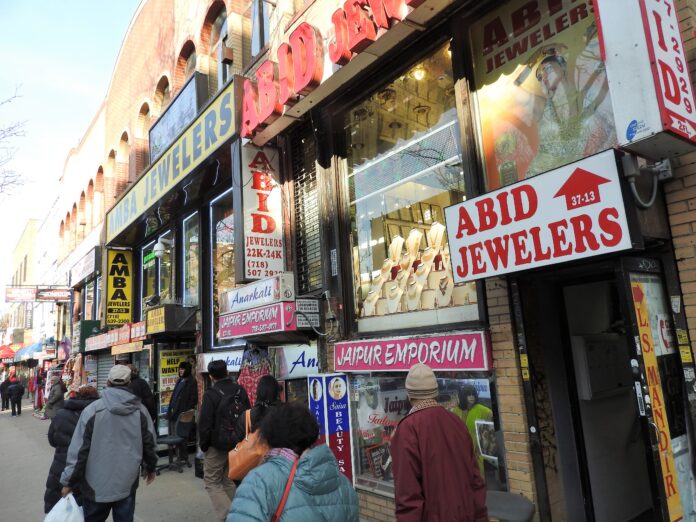
In 1931, during the economic hardship of the Great Depression, architecture firms across New York City faced severe downturns, leaving many skilled draftsmen without work. Among them was Alfred Mosher Butts, an architect residing in Jackson Heights, Queens.
Turning his analytical background toward game design, Butts began developing a new pastime at his dining room table. That creation would eventually become Scrabble, one of the most successful board games in history, with its origins rooted directly in Queens.
The Blueprint of a Board Game
Before designing the board layout, Butts studied existing tabletop games and categorized them into three fundamental types:
- Numbers games: Dice games, bingo, and traditional card games relying primarily on probability.
- Movement games: Strategy games like chess and checkers played on a structured grid.
- Word games: Pastimes like anagrams that relied solely on vocabulary without scoring mechanisms.
Butts identified a missing element in existing word games: a balanced combination of vocabulary skill and chance. He sought to unite the structural mechanics of crossword puzzles with the chance element of drawing randomized letter tiles.
To balance gameplay, Butts established that frequently used letters should yield lower point values, while rarer letters should yield higher values. The challenge lay in determining the exact distribution and point values for each letter in the tile set.
Decoding The New York Times Front Page
To establish an accurate letter distribution, Butts turned to The New York Times. Manually calculating letter frequencies without modern digital tools, he analyzed the front page of the newspaper to tally how often each letter appeared in everyday written English.
Through this statistical breakdown, Butts determined the letter distribution and point values still used in modern English Scrabble sets:
- Common letters (such as E, A, and T) were assigned 1 point.
- Rare letters (such as Q and Z) were assigned 10 points.
- The total number of S tiles was deliberately capped at four to prevent players from easily pluralizing existing words for low-effort points.
From Lexiko to Criss-Cross Words
Butts initially named his creation "Lexiko." The early build had no board; players simply drew wooden tiles from a bag and formed words on a plain surface.
By the mid-1930s, Butts refined the structure by drawing a 15-by-15 grid that introduced premium scoring spaces, including Double Letter and Triple Word squares. He renamed this revised version "Criss-Cross Words."
To test and refine the rules, Butts brought set prototypes to the Community Church of Jackson Heights, located near 35th Avenue and 81st Street. There, Butts and local friends played experimental matches, adjusting word rules and point structures based on feedback.
Despite years of pitching the concept, commercial publishers—including Parker Brothers and Milton Bradley—declined to license the game. Butts hand-manufactured small batches in his home to sell directly to local buyers.
The 1948 Trademark and Macy's Expansion
The trajectory of the game shifted in 1948 when James Brunot, a game enthusiast who had acquired an early set, partnered with Butts. Brunot secured the manufacturing rights in exchange for paying Butts a royalty on each copy produced.
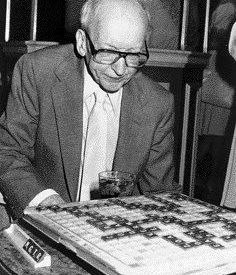
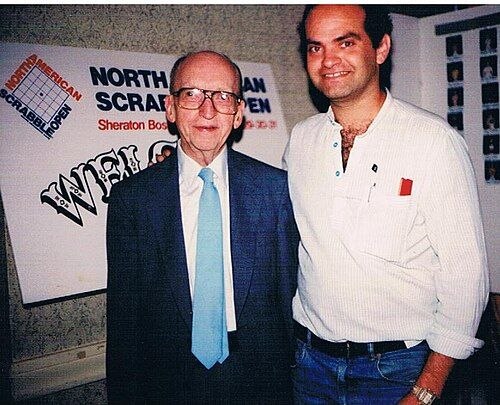
Brunot simplified the rule sheet, revised the board color scheme, and trademarked the name Scrabble in 1948.
The game achieved widespread commercial success in 1952 after Jack Straus, then-president of Macy's, discovered Scrabble while on vacation. Upon realizing Macy's flagship Herald Square store did not stock it, Straus placed a major order, quickly transforming Scrabble into a national best-seller.
Tracing Where Scrabble Was Invented in NYC Today
Visitors to Jackson Heights can still see physical reminders of the game's local history.
At the intersection of 35th Avenue and 81st Street, New York City installed a specialized commemorative street sign honoring Alfred Mosher Butts. The sign for 35th Avenue features subscript numbers under each letter matching Scrabble point values:
- T carries a subscript 1
- H carries a subscript 4
- V carries a subscript 4
- E carries a subscript 1
A short walk from the sign stands the Community Church of Jackson Heights, where early play-testing occurred. The surrounding neighborhood, designated in part as a historic district, retains much of the 1930s garden apartment architecture that framed Butts's daily life during the game's development.
Legacy of a Queens Innovation
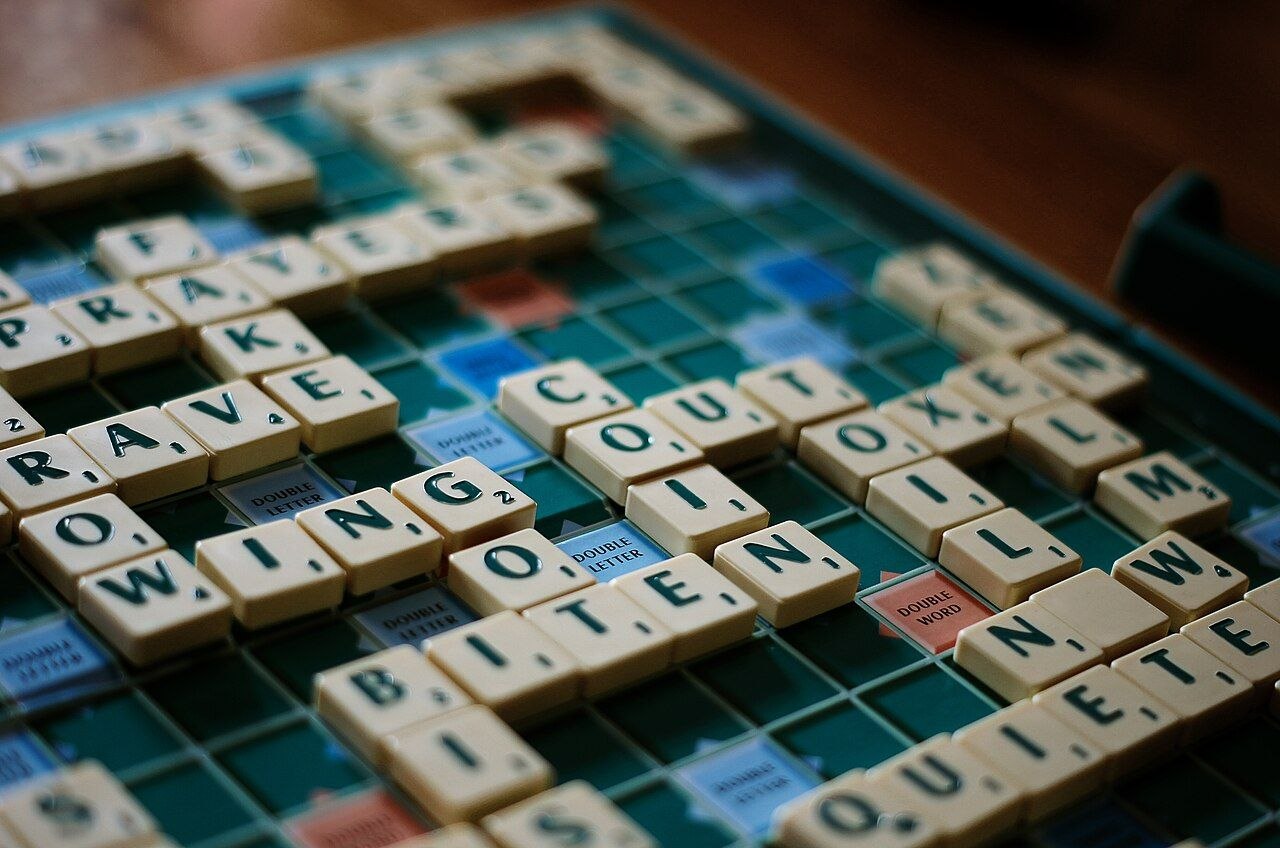
Alfred Mosher Butts eventually resumed his career as an architect, receiving steady royalty payments from Scrabble sales throughout his lifetime. More than 150 million sets of Scrabble have been sold worldwide in over 30 languages.
What began as an unemployed architect counting letter frequencies off The New York Times front page in a Queens apartment remains one of New York City's most enduring contributions to international popular culture.
Frequently Asked Questions
Where in NYC was Scrabble invented?
Scrabble was developed in Jackson Heights, Queens. Unemployed architect Alfred Mosher Butts created early versions in his apartment and tested gameplay at the Community Church of Jackson Heights.
Who invented Scrabble?
Alfred Mosher Butts created the original game concept (Lexiko/Criss-Cross Words) in 1931. James Brunot later acquired the manufacturing rights, refined the design, and registered the trademark name 'Scrabble' in 1948.
Where is the Scrabble street sign located in Queens?
The commemorative Scrabble street sign is located at the intersection of 35th Avenue and 81st Street in Jackson Heights, Queens. It features subscript tile values under each letter of the street name.
How were Scrabble tile values determined?
Alfred Mosher Butts calculated letter values and distribution by manually counting letter frequency across the front page of The New York Times.

