
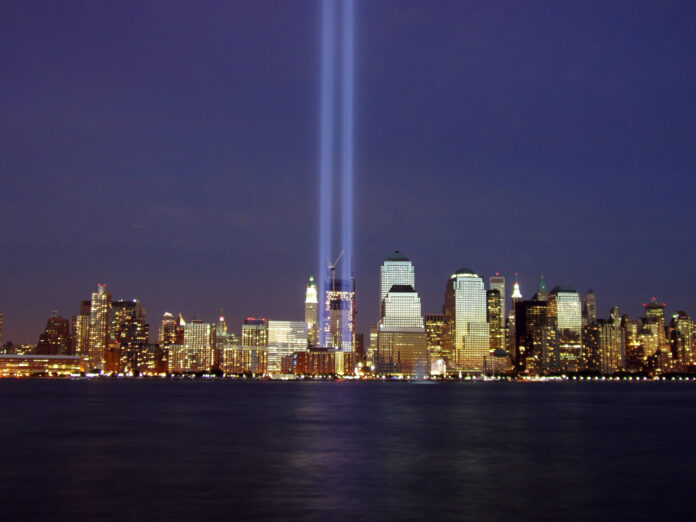
When the sun rose over Manhattan on September 11, 2001, the sky was clear and bright. Hours later, the city’s skyline changed forever, leaving New York in a heavy shock that ordinary prose could barely articulate. In the days that followed, art became a vital bridge toward collective processing and healing.
Poets from around the world put pen to paper to address the tragedy. Among the body of literature that emerged, several key poems about September 11 provided comfort, preserved memory, and captured the vulnerability of that week. These literary tributes continue to resonate today as historical testaments to grief and endurance.
From official recitations before Congress to quiet lines printed in national publications, these works capture New York City’s spirit during a pivotal moment. They sit alongside 9/11 heroes stories in NYC as enduring testaments to courage, compassion, and memory.
‘The Names’ by Billy Collins: A Roll Call of Remembrance
In 2002, United States Poet Laureate Billy Collins composed a poetic memorial for the first anniversary of the attacks. He wrote “The Names” specifically for a special joint session of the U.S. Congress held in New York City on September 6, 2002.
Rather than relying on political rhetoric, Collins took a personal and human approach. He crafted an elegiac roll call, moving alphabetically through the letters of the alphabet to spell out the names of individual victims lost at the World Trade Center, the Pentagon, and in Shanksville, Pennsylvania.
Yesterday, I glanced down the list of names.
It begins with Ackford, Adams, Adams, Adams,
and it ends with Zadroga, Zampieri, Zangrilli, Zinzi.
…
Names written in the pale sky.
Names rising in the pale sky.
Names wheeling in the pale sky.
Where they belong, where we will always remember them.
…
Let X be the ghost of a name.
Let X be the name of a soldier.
Let X be the letter that marks the spot.
Let X be a window looking into an empty room.
Lines like “Let X be the ghost of a name” ground a staggering national statistic in individual human loss. The poem reads like a quiet whisper across the American landscape, scattering names upon urban stone and wind.
‘Try to Praise the Mutilated World’ by Adam Zagajewski: Solace in the Aftermath
Timing transformed Polish poet Adam Zagajewski’s poem into a global anthem of reflection. Zagajewski wrote “Try to Praise the Mutilated World” months before the attacks, inspired by his travels through Europe and reflections on historical loss.
When The New Yorker published Clare Cavanagh’s English translation on the back page of its September 24, 2001 issue, it resonated deeply with a grieving city. Readers across the world pinned the poem to bulletin boards, saved news clippings, and shared it with loved ones.
Try to praise the mutilated world.
Remember June’s long days,
and wild strawberries, drops of rosé wine.
The nettles that methodically overgrow
the abandoned homesteads of exiles.
You must praise the mutilated world.
You watched the stylish yachts and ships;
one of them had a far trip to go,
while salty oblivion awaited others.
You’ve seen the refugees going nowhere,
you’ve heard the executioners sing joyfully.
You should praise the mutilated world.
Remember the moments when we were together
in a white room and the curtain fluttered.
Return in thought to the concert where music flared.
You gathered acorns in the park in autumn
and leaves swirled over the earth’s scars.
Praise the mutilated world
and the gray feather a heron lost,
and the mild light that strays and vanishes
and returns.
Zagajewski urges readers to honor a fractured world without ignoring the moments of quiet beauty that remain. He offers a message of endurance, showing how life slowly rebuilds itself around deep wounds.
‘Photograph from September 11’ by Wisława Szymborska: Suspended in Time
Nobel Prize-winning Polish poet Wisława Szymborska approached the event with quiet focus. Her poem “Photograph from September 11” (Fotografia z 11 września) centers on a single visual image from that Tuesday morning: individuals forced to leap from the burning upper floors of the Twin Towers.
They jumped from the burning floors—
one, two, a few more,
higher, lower.
The photograph halted them in life,
and now holds them
above the ground toward the earth.
Each is still complete,
with a particular face
and blood well hidden.
There’s enough time
for hair to come loose,
for keys and coins
to fall from pockets.
They’re still within the air’s domain,
within the realm of places
that have just opened.
I can do only two things for them—
describe this flight
and not add the last line.
Szymborska’s verse avoids sensationalizing the horror. Instead, it uses poetic space to freeze time, holding the victims in the air within the stanza before they reach the ground.
By choosing not to describe the final impact, Szymborska grants those lost a quiet dignity, creating one of the most poignant poetic reflections of the modern era.
‘September 17, 2001’ by Lucille Clifton: Immediate Raw Grief
While many writers required extended time to process the trauma, American poet Lucille Clifton responded directly in the immediate aftermath. She wrote “September 17, 2001” just six days after the collapse of the towers.
This morning
we are all walking
into the ruins of our assumptions.
the towers that held us
have fallen into dust
and we are standing
in the open air
with nothing to cover us
but our skin and each other.
Clifton’s poem captures the physical reality hanging over Lower Manhattan—the drifting soot, the smell of debris, and the eerie stillness on downtown streets. Her sparse capitalization and direct tone give the verse an unvarnished, personal quality.
She addresses the sudden realization of national vulnerability, reflecting on how daily security changed overnight. Through concise language, Clifton captures the collective grief felt by New Yorkers navigating the city in those early days.
‘When the Towers Fell’ by Galway Kinnell: Downtown Manhattan Speaks
Galway Kinnell, a Pulitzer Prize-winning poet and longtime resident of Manhattan, experienced the disaster in his own neighborhood. His poem “When the Towers Fell” is an expansive elegy deeply rooted in the physical reality of Downtown Manhattan in late 2001.
A cloud of white dust blooms over the avenue,
sifting down across windshields and fire escapes.
…
On phone poles and subway tiles,
the faces look out from taped paper—
smiling, holding children, caught in summer light.
Have you seen him? Have you seen her?
…
The city breathes in its own ashes
and stands stunned in the morning light.
Kinnell incorporates historical echoes, drawing inspiration from Walt Whitman’s nineteenth-century odes to New York City. He describes the heavy cloud hanging over the streets, the missing persons flyers posted on phone poles, and the stunned silence at the city’s center.
By combining personal observation with historical reflection, Kinnell captured both the physical destruction at Ground Zero and the emotional impact felt across Lower Manhattan neighborhoods.
How Poems About September 11 Help Us Remember Today
Literature plays an important role in how New York City preserves its collective memory. Decades after the events of 2001, reading these poems helps new generations connect emotionally with the history of Lower Manhattan.
Today, literary works and personal testimonies are preserved in the permanent archives at the National September 11 Memorial & Museum, located at 180 Greenwich Street in Lower Manhattan. Visitors standing by the twin reflecting pools can experience how art and history combine to honor the 2,977 victims lost.
If you are planning a reflective walk through Lower Manhattan, taking time to pause at Ground Zero offers a moment of quiet remembrance. You can pair a visit to the memorial plaza with a walk through nearby historic creative neighborhoods, such as Tribeca’s neighborhood art galleries, where artistic expression continues to flourish.

