
The New York City Fire Department, officially the Fire Department of the City of New York (FDNY), is a department of the government of New York City that provides fire protection, technical rescue, primary response to biological, chemical, and radioactive hazards, and emergency medical services to the five boroughs of New York City.
 The New York City Fire Department is the largest municipal fire department in the United States and the second largest in the world after the Tokyo Fire Department. The FDNY employs approximately 11,051 uniformed firefighters and 4,414 uniformed EMTs, paramedics, and fire inspectors. Its regulations are compiled in title 3 of the New York City Rules. The FDNY’s motto is New York’s Bravest. The FDNY serves more than 8.5 million residents within a 302 square mile area.
The FDNY headquarters is located at 9 MetroTech Center in Downtown Brooklyn, and the FDNY Fire Academy is located on Randalls Island.
History of FDNY
The Volunteer Era: 1648–1865
Throughout the volunteer era, the organization of the department changed and developed to fit the needs of New York City’s growing population and geographical expansion. Fighting fires required a lot of manpower, from the initial bucket brigades to the organized volunteer companies. Before the first fire engines were used in New York, all citizens were expected to help at fires by forming part of a bucket brigade.
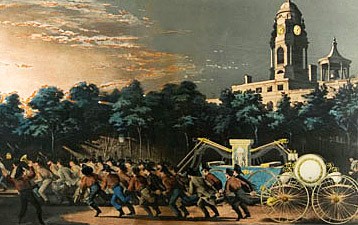
In 1648, the Governor of the colony, Peter Stuyvesant, appointed four fire Wardens to help prevent fires by patrolling the colony and inspecting homes for wooden chimneys and thatched roofs. One of the first fire alarm systems was instituted in 1658 with the “rattlewatch.” The rattlewatch consisted of eight men who were charged with patrolling the town at night carrying wooden rattles that they sounded upon discovery of smoke or fire. Townspeople were expected to wake up and hurry to the location of the fire. Fires, at that time, were fought using leather buckets.
Citizens of New Amsterdam were required to fill three buckets of water at sunset and place them at their doorsteps in case an alarm was sounded. At the scene of the fire, a bucket brigade was formed – one line of people passed filled buckets from the water source to the fire, and the second line passed empty buckets back to the water source to be refilled.
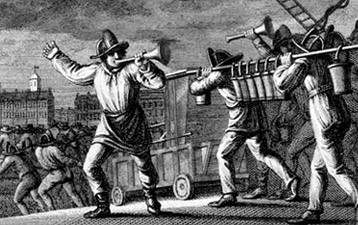
In 1683, the British took over the colony of New Amsterdam and renamed it New York. Fire wardens were appointed to inspect chimneys and hearths, as well as to make sure each house had at least one leather bucket. If the fire wardens found anyone in violation of the city’s fire prevention ordinances, that person could be fined up to twenty shillings. Fines were used to keep fire equipment, such as hooks, small ladders, and buckets, in good condition. During a fire alarm, citizens were expected to throw their buckets into the street to be picked up by able bodied persons forming part of the bucket brigade. Fires were fought in this manner until hand engines were introduced.
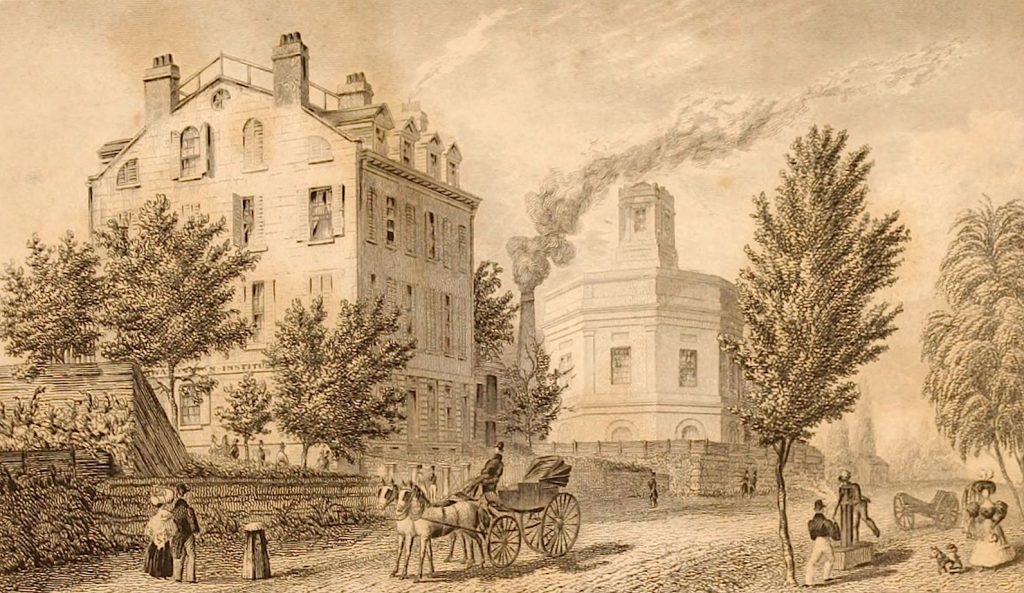
The first fire engines came to New York in 1731 from Richard Newsham of London. The addition of hand-pumped and hand-drawn engines to firefighting led to the formation of volunteer companies because an organized system of people was needed that knew how to operate and maintain the pumpers.
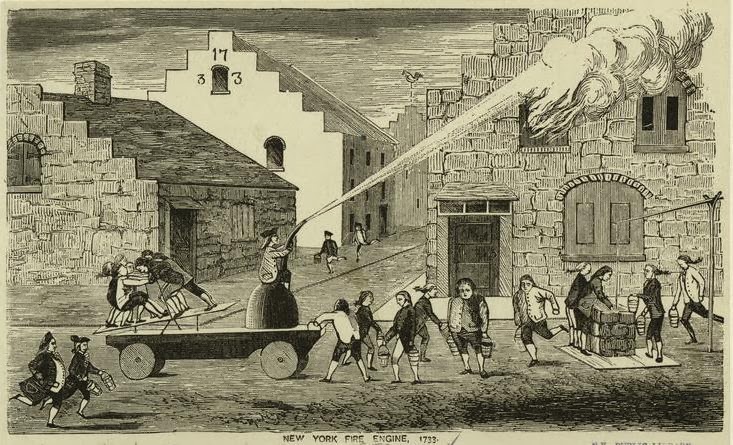
An “overseer of fire engines” was put in charge of maintaining the pumpers. Bucket brigades were still formed at fires, but were used to fill the engine’s cistern, rather than to dump water onto the fire itself. In 1736, the first two fire engines in this city, initially housed in City Hall, were moved into the first firehouse on Broad Street. In December of 1737, the General Assembly of the Colony of New York passed an act to appoint no more than forty-two sober, discreet, able-bodied men as firefighters – thus, the volunteer fire department was formed and was headed by Jacob Turck.
Post-Revolution: 1786–1865
After the Revolutionary War, the volunteer department grew in size and reputation. Volunteers viewed their duty as a civic responsibility, and sometimes used firefighting as a springboard into politics. In 1795, engine houses were furnished with two poles, each long enough for firemen to carry twelve buckets each. This innovation decreased the need for the general populace to become involved in bucket brigades and furthered the sense of fellowship existing between company members.
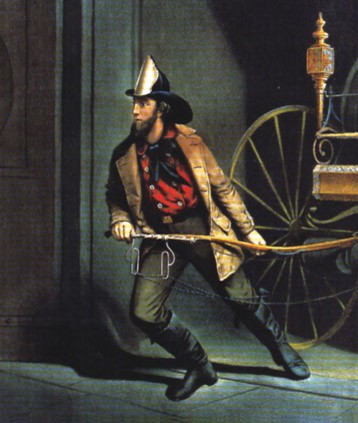
Firefighting techniques changed as water became more accessible. Water was supplied by wells and water mains. In 1807, the first fire plug – forerunner to the modern fire hydrant – was put down at the corner of William and Liberty streets. The first hose company was established in 1812 and, in 1831, the first hydrant company was formed. Hose companies brought extra hose for engines, especially as the city grew beyond available water supplies, and hydrant companies opened hydrants at the scene of a fire. In 1837, construction began on the first Croton aqueduct. Upon completion in 1842, the increased availability of water improved how volunteers fought fires. Men no longer had to drag their apparatus, possibly miles, to the nearest water source – decreasing their response times to fires and their need for runners.
By the 19th century, the fire department was the ultimate boys club, with gangs of rival firefighters, with their own volunteer ‘runners’, raced to fires as though in a sports competition. Fisticuffs regularly erupted. The combination of runners and rivalries between companies led to the fire department’s bad reputation. The city needed an organized and enforced system put into place, as well as men who could devote more time to fighting fire.
The Paid Department Era: 1865–1898
In 1865, the volunteer fire department was abolished by a state act which created the Metropolitan Fire District and the Metropolitan Fire Department (MFD). This effectively gave control of the fire departments in the cities of New York and Brooklyn to the Governor who appointed his Board of Commissioners. There was never any effective incorporation of the fire departments of the two cities during this period. It wasn’t until the Greater City of New York was consolidated in 1898 that the two were combined under one common organization or organizational structure.
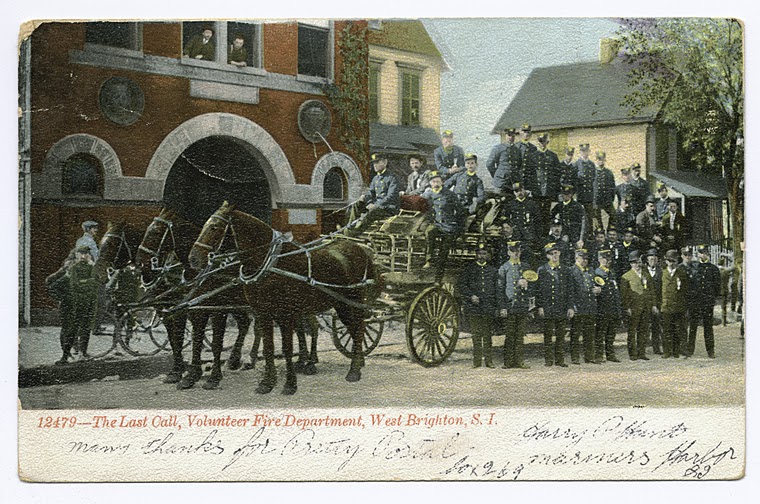
The members of the paid fire department were primarily selected from the prior volunteers. All of the volunteer’s apparatus, including their fire houses, were seized by the state who made use of them to form the new organization and form the basis of the current FDNY.
Initially, the paid fire service only covered present day Manhattan, until the act of 1865 which united Brooklyn with Manhattan to form the Metropolitan District. The same year the fire department consisted of 13 Chief Officers and 552 Company Officers and firemen. The officers and firemen worked a continuous tour of duty, with three hours a day off for meals and one day off a month, and were paid salaries according to their rank or grade.
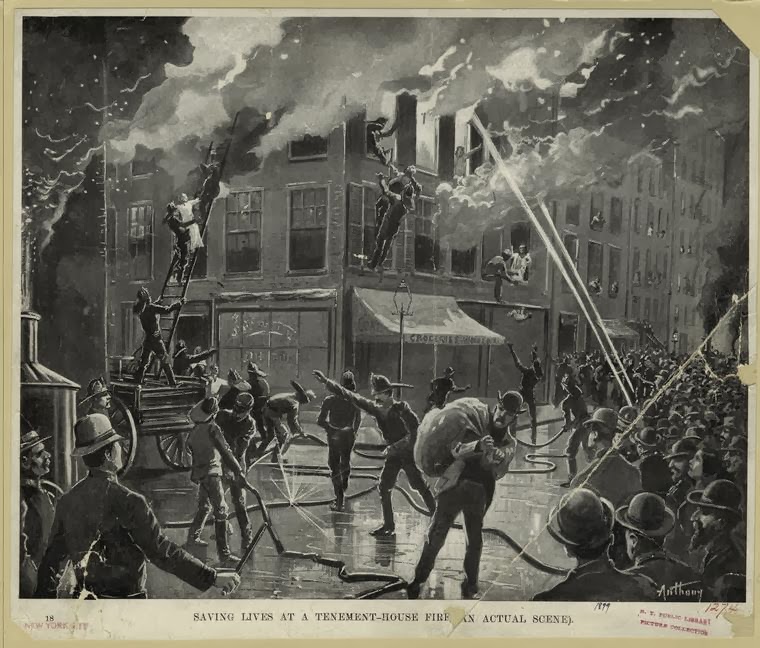
Following several large fires in 1866 which resulted in excessive fire losses and a rise in insurance rates, the fire department was reorganized under the command of General Alexander Shaler, and with military discipline the paid department reached its full potential which resulted in a general reduction in fire losses. In 1870 the merit system of promotion in the Fire Department was established. Southwestern Westchester County (which would later become the western Bronx) was annexed by New York in 1874 and the volunteers there were phased out and replaced by the paid department. This pattern was repeated as City services expanded elsewhere.
1898–2001
On January 1, 1898 the different areas of New York were consolidated, which ushered the Fire Department into a new era. All the fire forces in the various sections were brought under the unified command of the first Commissioner in the history of the Fire Department. This same year Richmond (now Staten Island) became a part of the City of New York, but the volunteer units there remained in place until they were gradually replaced by paid units in 1915, 1928, 1932 and 1937 when only two volunteer units remained, Oceanic Hook & Ladder Vol Engine and Richmond Fire. In 1976 a third volunteer fire company, Metro Fire Association Volunteer Fire Company was given a charter to operate within Staten Island and with an old 1954 Ward LaFrance Fire Apparatus began to respond to emergencies in Staten Island.
The unification of the Fire Department, which took place in 1898, would pave the way for many changes. In 1909 the Fire Department received its first piece of motorized fire apparatus. On March 25, 1911 a fire in the Triangle Shirtwaist Company killed 146 workers, most of whom were young female immigrants. Later the same year the fire college was formed to train new fire fighters, and in 1912 the Bureau of Fire Prevention was created.
[su_quote cite=”Chief Edward F. Croker, FDNY, 1908″ url=”https://www.yelp.com/biz/the-william-vale-brooklyn-4?hrid=vVJi-grXRqj86Lk6yHsbZg&utm_campaign=www_review_share_popup&utm_medium=copy_link&utm_source=(direct)”]Firemen are going to get killed. When they join the department they face that fact. When a man becomes a fireman his greatest act of bravery has been accomplished. What he does after that is all in the line of work. They were not thinking of getting killed when they went where death lurked. They went there to put the fire out, and got killed. Firefighters do not regard themselves as heroes because they do what the business requires.[/su_quote]
In 1919 the Uniformed Firefighters Association was formed. Tower ladders and the SuperPumper System were introduced in 1965. In 1982 the first female firefighters joined the ranks of the Fire Department.
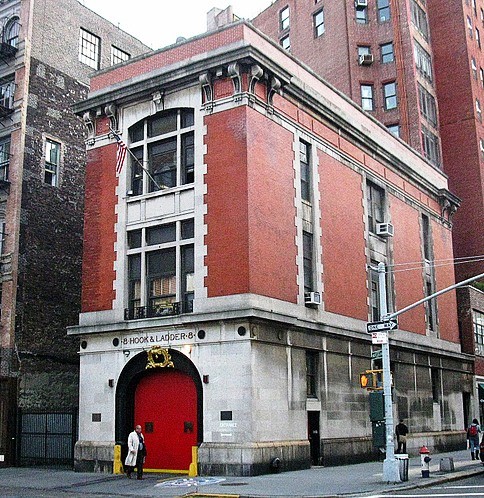
In 1984 and 1989, the comedy films Ghostbusters and Ghostbusters II used the Manhattan Ladder Company 8 building for the externals of the Ghostbusters’ office building. On March 17, 1996, Mayor Rudolph W. Giuliani merged the emergency medical services of the NYC Health and Hospitals Corporation into the FDNY.
September 11, 2001 attacks
FDNY fire companies and EMS crews were deployed to the World Trade Center minutes after Flight 11 struck the north tower. Chief officers set up a command center in the lobby as first arriving units entered the tower and firefighters began climbing the stairs. A mobile command center was also set up outside on Vesey Street, but was destroyed when the towers collapsed. A command post was then set up at a firehouse in Greenwich Village. The FDNY deployed 121 engine companies, 62 truck companies, 5 rescue companies, 6 squad companies, 27 Chief Officers, along with many other units to the site, with more than 1,000 firefighters, EMTs and paramedics on the scene when the towers collapsed.
Meanwhile, average response times to fires elsewhere in the city that day only rose by one minute, to 5.5 minutes. Many of the surviving firefighters continued to work alternating 24-hour shifts as part of the rescue and recovery effort. Firefighters and EMS personnel came from hundreds of miles around New York City, including numerous career and volunteer units in Upstate New York, Long Island, Connecticut, New Jersey, Pennsylvania, Maryland, Florida and even Michigan.
[su_quote cite=”Chief Edward F. Croker, FDNY” url=”https://www.yelp.com/biz/the-william-vale-brooklyn-4?hrid=vVJi-grXRqj86Lk6yHsbZg&utm_campaign=www_review_share_popup&utm_medium=copy_link&utm_source=(direct)”]I have no ambition in this world but one, and that is to be a fireman. The position may, in the eyes of some, appear to be a lowly one; but we who know the work which the fireman has to do believe that his is a noble calling. Our proudest moment is to save lives. Under the impulse of such thoughts, the nobility of the occupation thrills us and stimulates us to deeds of daring, even of supreme sacrifice.[/su_quote]
In the aftermath of the September 11, 2001 attacks, the Fire Department has rebuilt itself and continues to serve the people of New York. During the Northeast Blackout of 2003, FDNY was called on to rescue hundreds of people from stranded elevators in approximately 800 Manhattan high-rise office and apartment buildings. The entire fire department was held over from the day tour to almost double the total force to 3,401 firefighters to handle the many fires which resulted, reportedly from people using candles for light.
How to become FDNY firefighter
You can start thinking about becoming an FDNY Firefighter as early as 17 1/2 years of age. You should not reach your 29th birthday by the beginning of the application process. To be hired as a New York City Firefighter, you must
- Pass both the computer-based test and physical ability test.
- Be a U.S. citizen at the time of appointment.
- Be at least 21 years of age by time of appointment.
- Be able to prove your identity and the right to obtain employment in the United States under the Immigration Reform and Control Act of 1986.
- Pass medical and psychological tests, as well as a drug screening.
- Demonstrate proof of good character and pass a background investigation.
- Be able to understand and be understood in English.
- Hold a valid New York State motor vehicle driver’s license.
- Be a resident of one of the five boroughs of New York City or live in Nassau, Orange, Putnam, Rockland, Suffolk or Westchester County.
There are five steps to becoming an FDNY Firefighter.
- Apply
File to take the written Firefighter exam. - Take Written Exam
Take the written exam that includes basic reading, listening, problem-solving, and arithmetic. - Take Physical Exam
Pass Candidate Physical Ability Test (CPAT) that includes an agility and strength test. - Complete Candidate Review
Pass medical, psychological and background checks. - Graduate From The Fire Academy
Successfully complete an 18-week classroom and physical fitness program that includes fire service training.
Never forget…

